
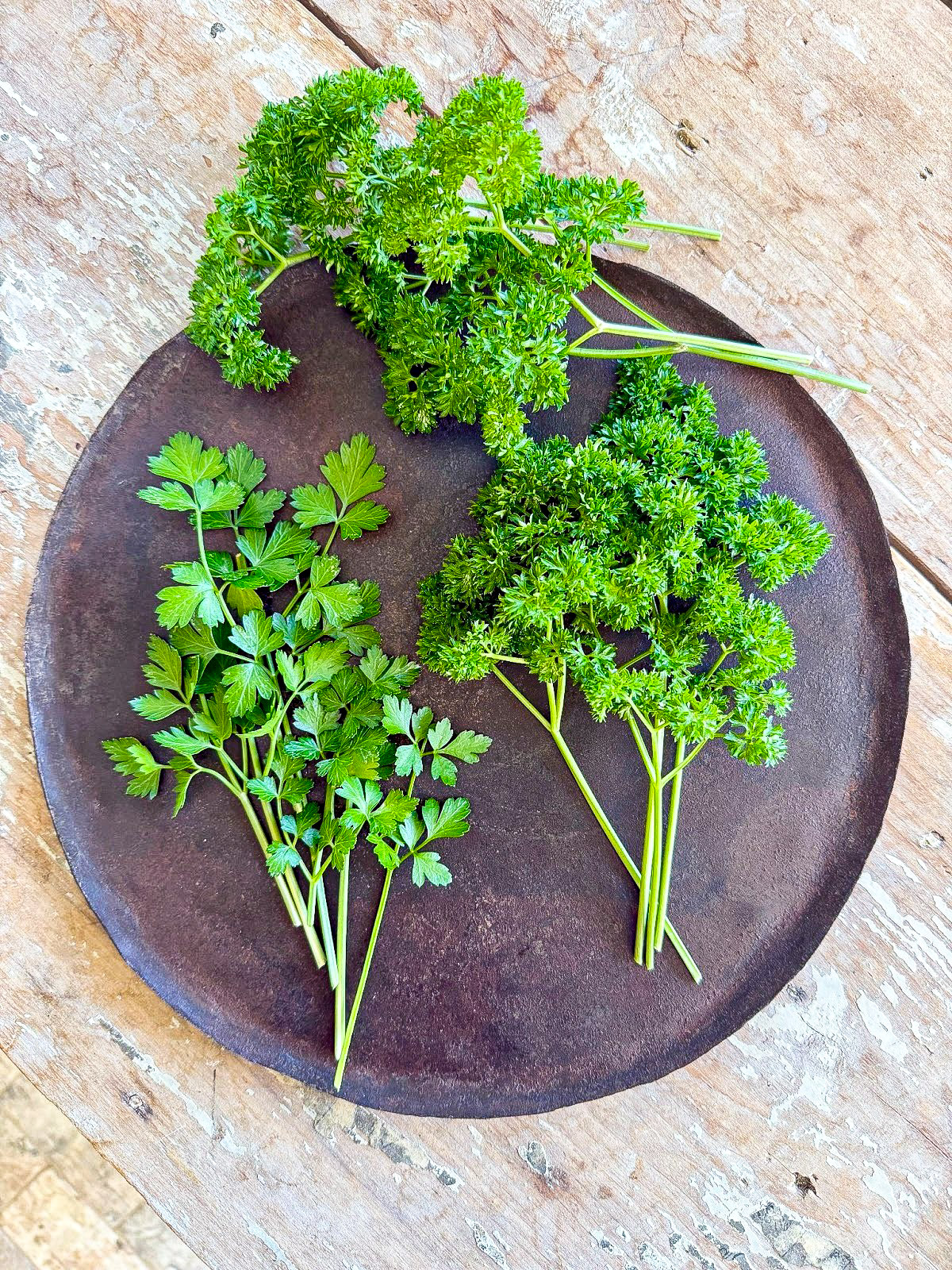
Have you ever found yourself at the supermarket or out in your herb garden wondering, “Does it really matter which parsley I use?” If so, you’re not alone!
So what’s the difference between flat leaf and curly parsley? And which one should you use in your recipes?

A Bit of Parsley History
Before we distinguish which parsley to use in your recipes, let’s take a closer look at some other interesting things about this herb.
Did you know there are over 40 distinct cultivars? I just discovered this while working on this post!
When I was younger, history was not one of my favorite subjects. But as I’ve grown older, I’ve become fascinated by the history of just about everything. If you ever get a chance, I encourage you to look into the history of parsley. The many ways different cultures have used it are quite fascinating.
Parsley dates back to ancient times and originated in the Mediterranean region of southern Europe and western Asia. The Greeks and Romans are known for their use of parsley. Especially the Romans who made parsley very popular for both culinary and medicinal uses.
The following health issues have shown improvement after drinking parsley juice or using topical ointments made from parsley.
- Blood Pressure
- Cancer
- Respiratory
- Muscle cramps
- Skin conditions
That makes sense because it is packed with vitamins A, C, and K, supporting everything from immune health to bone health and normal muscle function.
Now Let’s Bring Parsley to the Kitchen
Although parsley has many different varieties, the two most common are flat leaf and curly parsley.
Back to the original question: What’s the difference, and which one should you use in your recipes?
Parsley is a classic kitchen staple that quietly elevates your dishes. Once we identify the difference between flat leaf and curly, you’ll begin to reach for each one with intention.
Flat Leaf Parsley (Italian Parsley)
Flat leaf parsley, also known as Italian Parsley, is the go-to choice for most recipes.

What it’s like:
- Deep green, smooth, flat leaves
- Strong, robust, peppery flavor
- Tender stems that can also be used in recipes
Why chefs and home cooks love it:
Flat leaf parsley has a more pronounced flavor, which means it doesn’t get lost when added to dishes. It blends nicely into recipes and looks appealing sprinkled on top.
I personally think flat-leaf is easier to chop, while curly can be a bit tough and dry. The leaves are soft, not chewy, making them more enjoyable to eat.

Best uses in the kitchen:
It’s perfect for incorporating into meat, chicken, and pasta dishes. I often chop it into salads, pairing it with other complementary herbs like basil, chives, and dill.
It adds a fresh, bright note when stirred into sauces or dressings. And it’s especially nice for topping off soups and roasted vegetables.
Tips:
- While the stems can be used for cooking, remove the woody part.
- Use a sharp knife to avoid bruising leaves.
- Keep fresh cuts for one to two weeks by trimming the ends and placing them in a vessel of water in the fridge.
- I often keep mine out on the counter near the cooking area. Not only is it practical and within reach, but it also adds a cheerful touch to the kitchen.
Garden note:
Due to its flavor and being incredibly versatile, you’ll want to grow lots of this variety for recipes!
Curly Parsley (French Parsley)
Curly parsley is the one we remember seeing as a beautiful garnish on restaurant plates. But honestly, in my opinion, it deserves way more credit than that.

What it’s like:
- Bright green with tight ruffled leaves
- Milder, slightly grassy flavor
- More structured with a crisp texture
Why chefs and home cooks love it:
- It’s a vibrant green garnish with visual appeal. It provides texture and freshness to a plate that might otherwise feel a bit neutral.
- It adds crunch to raw salads.
- It stays fresh longer, which is nice for a dish that will be sitting out for a while.
- Here’s a good one! A few bites and you have a breath-freshener to follow your meal!
Best uses in the kitchen:
- Garnishing plates for a polished presentation
- A wonderful choice for adding more texture and body to a salad
- Sprinkle over fish, chicken, or roasted vegetables just before serving
- Mix it into herb blends when you want a light parsley note
Here are a few of my favorite herb blends that work well together:
🌿Curly parsley, chives, dill, touch of lemon zest: Toss into salads, sprinkle over roasted vegetables, or finish potatoes
🌿Curly parsley, fresh basil, minced garlic, lemon juice, olive oil, salt & pepper: Whisk into a dressing for salads or drizzle over tomatoes & mozzarella
🌿Curly parsley, small amount of thyme, chives: Sprinkle over fish, chicken, or roasted vegetables just before serving
Tips:
Remove stems and only use the soft ruffled tops for presentation.
- For cooking, you can use the stems, but chop them very finely.
- Pair with foods that are light in color to create beautiful contrast.
Garden note:
Use it as an ornamental plant. It adds interest to flower gardens or tucked into decorative containers on a patio.
Fun Fact:
The curly shape makes it easy for kitchen staff to distinguish it from cilantro – something I can truly appreciate. I can’t tell you how many times I’ve planted both cilantro and flat-leaf parsley and had to stop and smell (or even taste) to be sure!
So …Which Type of Parsley Should You Use?

If you cook often, flat leaf will likely become your everyday staple. But having both on hand gives you the best of both worlds.
Don’t be afraid to experiment and discover how you enjoy each one. Sometimes it’s those small choices that make your cooking feel more like your own.
A Little Kitchen Tip
When a recipe simply says “parsley”, it almost always means flat leaf (Italian parsley).

I’d love to see in the comments your favorite ways to use flat leaf and curly parsley!

Leave a Reply