
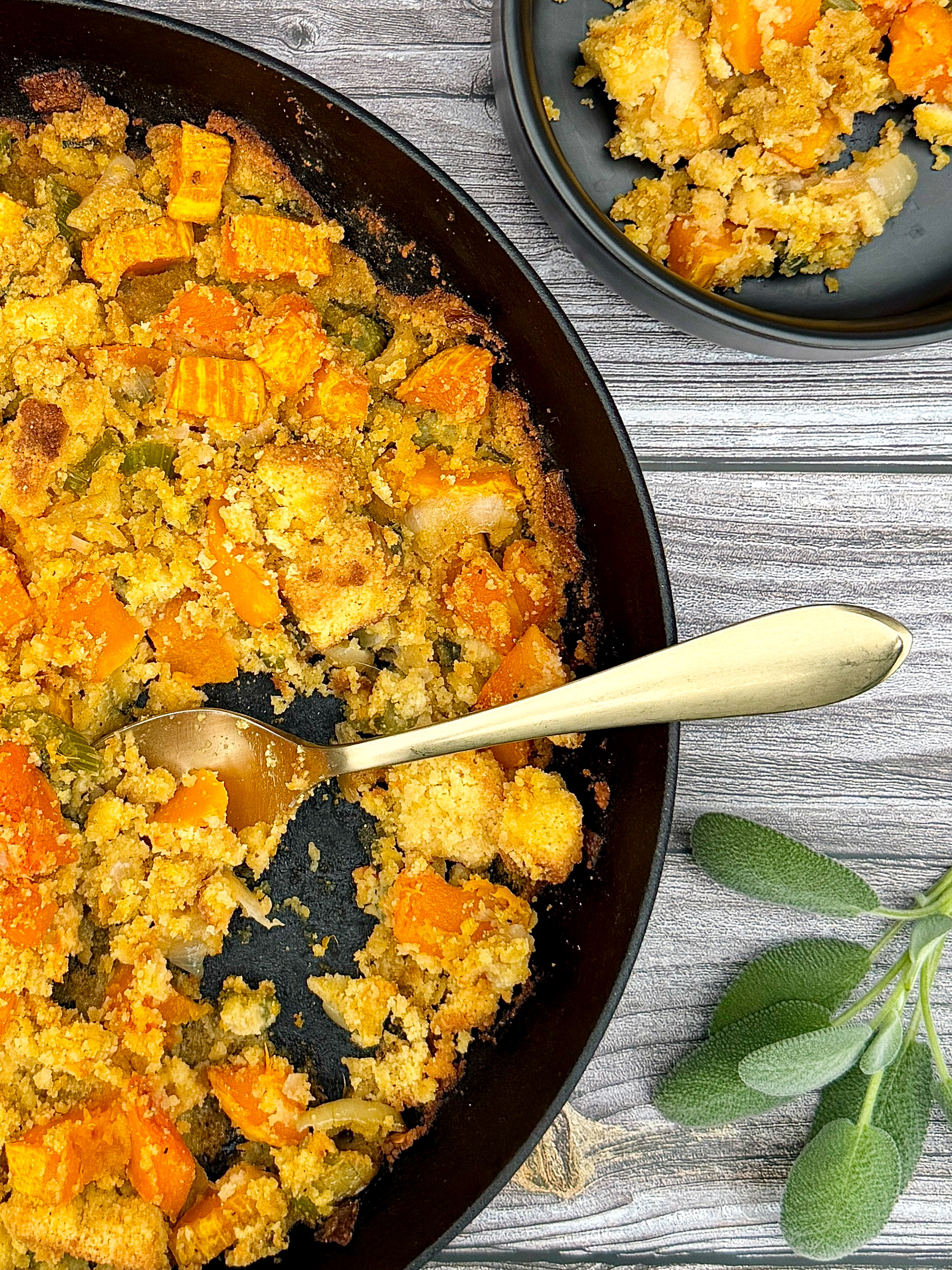
If you love cornbread casserole, here’s one with a fall twist! When the butternut squash starts piling up in the fall, this Butternut Squash Cornbread Casserole dish is what I want on the table.

Roasted squash, onion, celery, and fresh sage get tossed with chunks of cornbread and a little chicken stock, then baked in the oven until the top turns golden brown. It’s hearty enough for a Sunday supper and pretty enough to carry to Thanksgiving. You can use homemade cornbread or pick up a pan from the store. Either way, it comes together easily.

Why You’ll Love This Butternut Squash Cornbread Casserole
It tastes like fall. Roasted butternut squash, fresh sage, and golden cornbread bring all the flavors of the season together in one dish.
One skillet, start to finish. The onion, celery, and sage sauté right in the cast iron. Everything else goes in after, and the whole skillet slides into the oven.
Side dish or main course. Serve it beside roasted turkey or chicken, or stir in 2 cups of chopped cooked chicken or turkey to make it a complete meal on its own.
Holiday-worthy presentation. A cast iron skillet of this on the Thanksgiving table gives you that farmhouse fall feeling.
Garden squash stretches all winter. Once the butternut squash is harvested and cured, it keeps for several months in a cool, dry spot. This casserole is worth making long after the growing season ends.
Ingredients

Cornbread: One 8×8 pan, cut into 1-inch cubes. Homemade or store-bought both work. I recommend using an unsweetened, savory cornbread. The squash already brings plenty of sweetness on its own.
Butternut squash: One medium squash, peeled and cubed to about 1½ inches, roasted to get those caramelized edges and natural sweetness.
Olive oil, salt, and pepper: For tossing the squash before roasting. Simple seasoning that lets the squash flavor come through.
Butter: The fat for sautéing the aromatics.
White onion and celery: The aromatic foundation.
Fresh sage: Sage and butternut squash are one of fall’s best flavor pairings.
Chicken stock: One 14.5-ounce can poured over everything to bring moisture to the casserole as it bakes.

How to Make Butternut Squash Cornbread Casserole
Roast the squash first. Peel, cube, toss with olive oil, salt, and pepper, and roast until tender and starting to caramelize at the edges.

Sauté low and slow. Melt the butter in the cast iron over medium heat and cook the onion and celery until soft and golden, then stir in the sage.
Combine off the heat. Pull the skillet off the burner and add the roasted squash. Pour in all the chicken stock and toss until everything is well combined.

Fold in the cornbread gently. Add the cornbread cubes and fold them in with a large spoon. Go easy. You want intact chunks of cornbread throughout, not crumbles.

Bake uncovered. Thirty-five minutes at 350°F until the top is golden brown. If it browns faster than expected, tent loosely with foil.
How to Serve Butternut Squash Cornbread Casserole
Straight from the cast iron skillet set on a trivet at the center of the table. The farmhouse presentation looks gorgeous!
Alongside roasted turkey or chicken for a holiday spread. This earns its place on a Thanksgiving table.
As a Sunday supper main with a simple green salad. Stir in chopped cooked chicken or turkey first to make it a complete meal.
With cranberry sauce on the side. The tartness of cranberry against the sweet squash and savory cornbread is a combination worth trying.

Frequently Asked Questions
What if I don’t have a cast iron skillet?
Any oven-safe skillet or a standard 9×13 baking dish works. Sauté the onion and celery in whatever skillet you have, then transfer everything to the baking dish before the cornbread goes in. The cast iron gives you the crispiest edges, but the dish will be just as flavorful either way.
Can I use dried sage instead of fresh?
You can, but use half the amount. Dried sage is significantly more concentrated than fresh and can easily overpower the dish. Fresh sage is worth seeking out when you can find it. It has a softer, more floral quality that works so well here.
Can I use vegetable stock instead of chicken stock?
Yes. Vegetable stock makes this a vegetarian dish without any noticeable flavor change. Use the same amount.

Butternut Squash Cornbread Casserole
Equipment
- cast iron skillet
- baking sheet
- cutting board
- sharp knife
- vegetable peeler
Ingredients
- 6 cups cornbread (8×8-inch pan, store-bought or homemade, cut into 1-inch cubes; use unsweetened or savory)
- 4 cups butternut squash (1 medium squash) (cut into 1½-inch cubes)
- 2 Tbsp olive oil
- ¼ tsp salt
- ¼ tsp pepper
- 2 Tbsp butter
- 1 white onion (diced)
- 4 celery stalks (chopped)
- 3 Tbsp fresh sage (chopped)
- 1 14.5 oz can chicken stock (about 1¾ cups)
Instructions
- Preheat the oven to 350°F (175°C).
- Peel the butternut squash and cut in half lengthwise. Scoop out the seeds, then cut into cubes about 1½ inches in size. One medium squash should yield about 4 cups.
- Spread the squash on a baking sheet, drizzle with olive oil, and sprinkle with salt and pepper. Toss until evenly coated, then spread back into a single layer. Roast for 25 minutes.
- Melt the butter in a cast iron skillet over medium heat. Add the onion and celery and cook for 8 to 10 minutes, tossing often with a wooden spoon, until softened and golden. If the edges start to brown before the vegetables are soft, reduce the heat slightly. Stir in the chopped sage and cook for one more minute.
- Remove the skillet from the heat. Add the roasted squash to the onion and celery. Pour in the chicken stock and toss until everything is combined. The mixture should look moist — if it seems dry, add a splash more stock.
- Add the cornbread cubes and fold them in gently with a large spoon, keeping the cornbread in chunky pieces rather than breaking it apart.
- Place the skillet in the oven and bake uncovered for 35 minutes, or until golden brown on top. If the top browns too quickly before the casserole is cooked through, lay a piece of foil loosely over the skillet.
Notes
Make ahead:
- Assemble through Step 6, cover, and refrigerate for up to 24 hours before baking.
- Transfer to a baking dish if refrigerating overnight. Cast iron and extended moisture don’t mix.
- Add 5 to 10 minutes to the bake time when starting from cold.
How to store:
- Transfer leftovers to an airtight container. Do not store in the cast iron skillet as moisture will cause it to rust.
- Refrigerate for up to 3 to 4 days.
How to reheat:
- Spread in a baking dish, cover with foil, and warm at 350°F (175°C) for 15 to 20 minutes until heated through.
- Remove the foil for the last few minutes if you’d like the top to crisp back up.
- Microwave individual portions in 60-second intervals until warmed through.
Freezing:
- Cool completely, then wrap tightly or transfer to a freezer-safe container.
- Freeze for up to 3 months.
- Thaw overnight in the refrigerator before reheating in the oven per the reheat instructions above.
Did You Make This Recipe?
Let us know in the comments below and share a photo on Facebook or Instagram. Mention or tag @countrygardensandtable!
Leave a Reply