
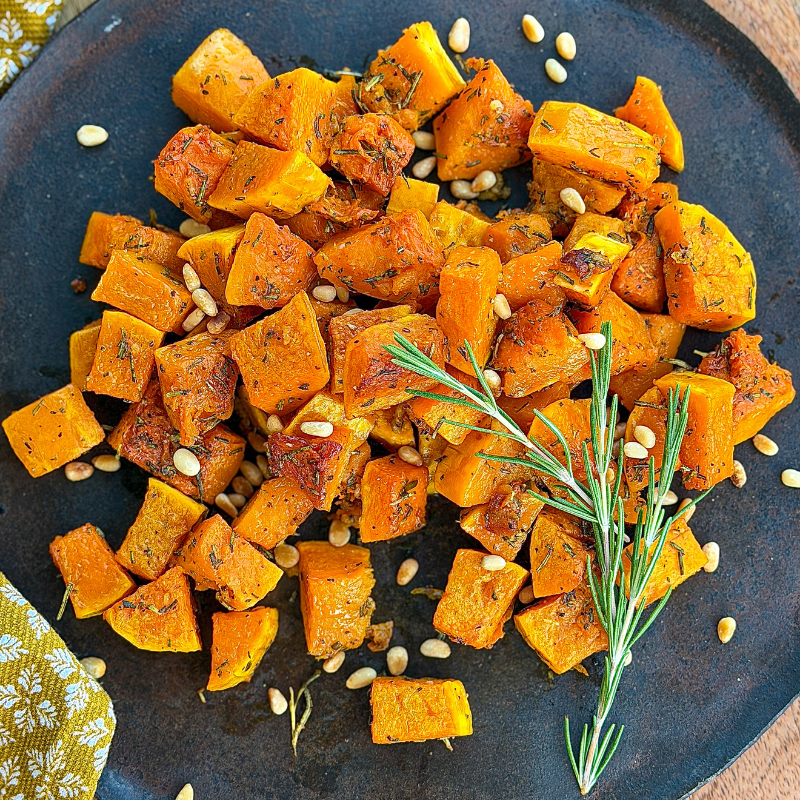
By the time butternut squash starts showing up in the garden, and the light in the early evening is turning that gorgeous gold color we love, I know it’s time for warmer, richer flavors on the table.
We grow butternut squash in the garden every year. Whether you sow the seeds directly in the ground or in containers to transplant later, it’s a vegetable plant that’s incredibly simple to grow.

Every year we look forward to having a bountiful harvest of them, to get us by several months. Butternut squash can store for 2 to 6 months when cured and stored properly. If you are interested in learning more about how to grow and store them, check out my Complete Guide to Growing Butternut Squash.

In my opinion, roasting is the best way to go when it comes to butternut squash. It caramelizes as it roasts, bringing out a natural sweetness. The earthiness in rosemary pairs beautifully with that sweetness, the garlic gives a warm, savory depth, and toasted pine nuts add a rich, buttery crunch. Not only do I love AND crave this flavor, the aroma alone makes the whole house feel like fall!
You don’t have to have a garden to enjoy it. Butternut squash is available at the supermarket year round. I hope this recipe is on your menu soon!

Why Roasting is the Best Way to Cook Butternut Squash
Roasting does something no other method can. The natural sugars in the squash caramelize in the oven, creating edges that are slightly golden and sweet. Steaming or boiling simply cannot replicate.
The flavor combination is amazing with the sweet squash, earthy rosemary, warm garlic, and buttery toasted pine nuts.
The house will smell incredible. Rosemary and garlic roasting together combined with the sweet smell of butternut squash is one of the best kitchen aromas of fall.
Garden to table. If you grow butternut squash, this is one of the most satisfying ways to use a fresh harvest. And if you don’t, the supermarket version is just as good.
Five ingredients, one pan, 35 minutes.

About Butternut Squash
Butternut squash is a winter squash with a sweet, nutty flavor and a dense, creamy orange flesh that holds up well to roasting. Unlike summer squash, it’s harvested in late summer or early fall but cures into a firm, long-lasting vegetable that stores well for months.

It’s one of the most versatile vegetables in the fall kitchen. Soups, pastas, salads, and roasted on its own as a side dish. When buying at the supermarket, look for one that feels heavy for its size with a matte, beige skin and no soft spots. A dull finish rather than a shiny one is actually a sign of ripeness.
Ingredients

Butternut squash: Peeled, de-seeded, and cut into 1½ to 2-inch cubes. Cut as evenly as possible so everything roasts at the same rate.
Olive oil: Coats the squash and helps it caramelize in the oven.
Fresh rosemary: Finely chopped. Fresh rosemary is worth using here.
Garlic: Tossed in with the squash before roasting so it mellows and sweetens in the oven rather than staying sharp and raw.
Toasted pine nuts: Their rich, buttery flavor is the finishing touch.
Kosher salt and fresh cracked black pepper
How to Make Roasted Butternut Squash with Rosemary and Garlic
Cut evenly. Peel, de-seed, and cube the squash into 1½ to 2-inch pieces. The more even the cuts, the more even the roast.


Toss thoroughly. Combine the squash in a mixing bowl with the olive oil, rosemary, garlic, salt, and pepper. Toss until every piece is well coated.
Give it room. Spread the squash in a single layer on a sheet pan, leaving a little space between pieces. Crowding the pan causes steaming rather than caramelizing, and caramelizing is the whole point.
Roast and flip. Roast at 350°F for 35 minutes, flipping halfway through for even browning on more sides.

Finish with pine nuts. Plate the squash and sprinkle toasted pine nuts over the top just before serving. Adding them at the end keeps them crunchy rather than soft.
How to Serve Roasted Butternut Squash with Rosemary and Garlic
As a fall side dish alongside roasted chicken, pork tenderloin, or a holiday turkey. This fits every occasion from weeknight dinner to Thanksgiving table.
Over grains – spoon the roasted squash over farro, quinoa, or wild rice for a hearty vegetarian meal.
Tossed into a salad with arugula, dried cranberries, and a balsamic vinaigrette for a seasonal salad.

Frequently Asked Questions
Do I need to peel the butternut squash before roasting?
For this recipe, yes. Peeling the squash before cubing gives you those clean, caramelized edges all the way around. The skin is edible but tough, and for a roasted cube presentation you should peel it first.
How do I know when the squash is done?
The squash should be tender all the way through when pierced with a fork, and the edges should be golden and caramelized. If the squash is tender but not yet golden, give it a few more minutes uncovered. If the edges are golden but the center is still firm, reduce the oven temperature slightly and continue roasting.
What can I substitute for pine nuts?
Toasted walnuts or pecans are the most natural substitutes and pair well with the rosemary and squash. Pumpkin seeds work well too and keep the dish nut-free. Whatever you use, toast them first. Raw nuts lack the depth and crunch that toasting brings out.
Want to grow your own butternut squash?
Here’s my Complete Guide to Growing Butternut Squash, where you’ll find everything you need to know about how to plant, water, fertalize, dealing with pesky pests and dusty mildew, to harvesting and curing. Follow this guide and you’ll have a generous harvest each autumn!

Looking for more roasted butternut squash recipes?
Try this Roasted Butternut Squash Spinach Salad with Maple Dijon Vinaigrette. It has all the fall flavors and textures wrapped up into one perfect autumn dish!


Roasted Butternut Squash with Rosemary & Garlic
Equipment
- sheet pan
- Large mixing bowl
- sharp chef's knife
- vegetable peeler
- small dry skillet (for toasting pine nuts)
Ingredients
- 1 butternut squash (peeled, de-seeded, and cubed into 1½ to 2-inch pieces)
- 2 Tbsp olive oil
- 4 rosemary sprigs (finely chopped)
- 3 garlic cloves (minced)
- ¼ cup toasted pine nuts
- ½ tsp kosher salt
- ½ tsp fresh cracked black pepper
Instructions
- Preheat the oven to 350°F (175°C).
- Cut the butternut squash in half, scoop out the seeds, peel it, and cut into cubes about 1½ to 2 inches in size. Cut as evenly as possible so the pieces roast at the same rate.
- Place the cubed squash in a large mixing bowl. Add the olive oil, chopped rosemary, minced garlic, salt, and pepper. Toss until everything is evenly and thoroughly coated.
- Spread the squash out on a sheet pan in a single layer, leaving a little space between the pieces. Crowding the pan will steam the squash instead of caramelizing it.
- Roast for approximately 35 minutes, flipping the squash halfway through, until the pieces are tender and the edges are golden and caramelized.
- While the squash is roasting, toast the pine nuts. In a small, dry skillet (no oil or butter added) over medium-low heat, add the pine nuts. Stir or shake the skillet constantly. Remove when they start to turn golden and smell nutty. Cool on a plate until ready to use.
- Transfer to a serving dish and sprinkle the toasted pine nuts over the top just before serving.
Notes
Make Ahead
- Peel, de-seed, and cube the squash up to 2 days ahead. Store in an airtight container in the refrigerator.
- Toast the pine nuts ahead and store at room temperature in a sealed container.
- Toss with oil and seasonings and roast fresh for the best caramelization.
How to store:
- Store roasted squash in an airtight container in the refrigerator for up to 3 to 5 days.
- Store pine nuts separately so they stay crunchy. Add fresh when serving leftovers.
How to reheat:
- Reheat in a 375°F (190°C) oven for 8 to 10 minutes until warmed through and edges are crisping back up.
- Alternatively, warm in a skillet over medium heat with a small drizzle of olive oil.
- Microwave works in a pinch. Reheat in 30-second intervals. Note the squash will be softer.
- Add fresh pine nuts after reheating.
Freezing:
- Let roasted cubes cool to room temperature completely before freezing.
- Flash freeze in a single layer on a parchment-lined baking sheet for 1 to 2 hours until frozen solid.
- Transfer to an airtight container or freezer bag with as much air removed as possible. Freeze for up to 10 to 12 months.
- Thaw overnight in the refrigerator. Note: thawed roasted squash will be softer. It is best used in warm dishes like soups or grain bowls rather than served as-is.
Did You Make This Recipe?
Let us know in the comments below and share a photo on Facebook or Instagram. Mention or tag @countrygardensandtable!
Leave a Reply